Independent web developer

Websites and tools that get the job done.

A business website from your idea, a better online store or a simpler workflow. I help with the structure, copy, design and development, with clear scope and a result you can use.

  • Written updates
  • Checked results
  • Source files included

01 / Selected work

Built for
real-life tasks.

Ten of my own websites and products, from booking calendars and online stores to learning platforms and research publishing. Each connects an interface to practical work.

RentTools laptop mockup showing the English rental calendar synchronization homepage
Own productRental management

RentTools

Reservations, cleaning tasks and connected calendars in one place for property hosts.

  • Next.js
  • TypeScript
  • iCal
Read the case study

The problem

Short-term rental hosts need to organize reservations, cleaning and calendars across properties and booking platforms.

What I built

A rental-management product with guest information, cleaning tasks, role-based access and iCal feeds. The application uses Next.js, TypeScript and Prisma with SQLite/libSQL.

What you can review

The public product and open-source repository show the interface and workflow. Calendar synchronization follows the participating platforms’ polling intervals.

Relevant work: responsive interfaces, booking state, data integration and self-hostable source code.

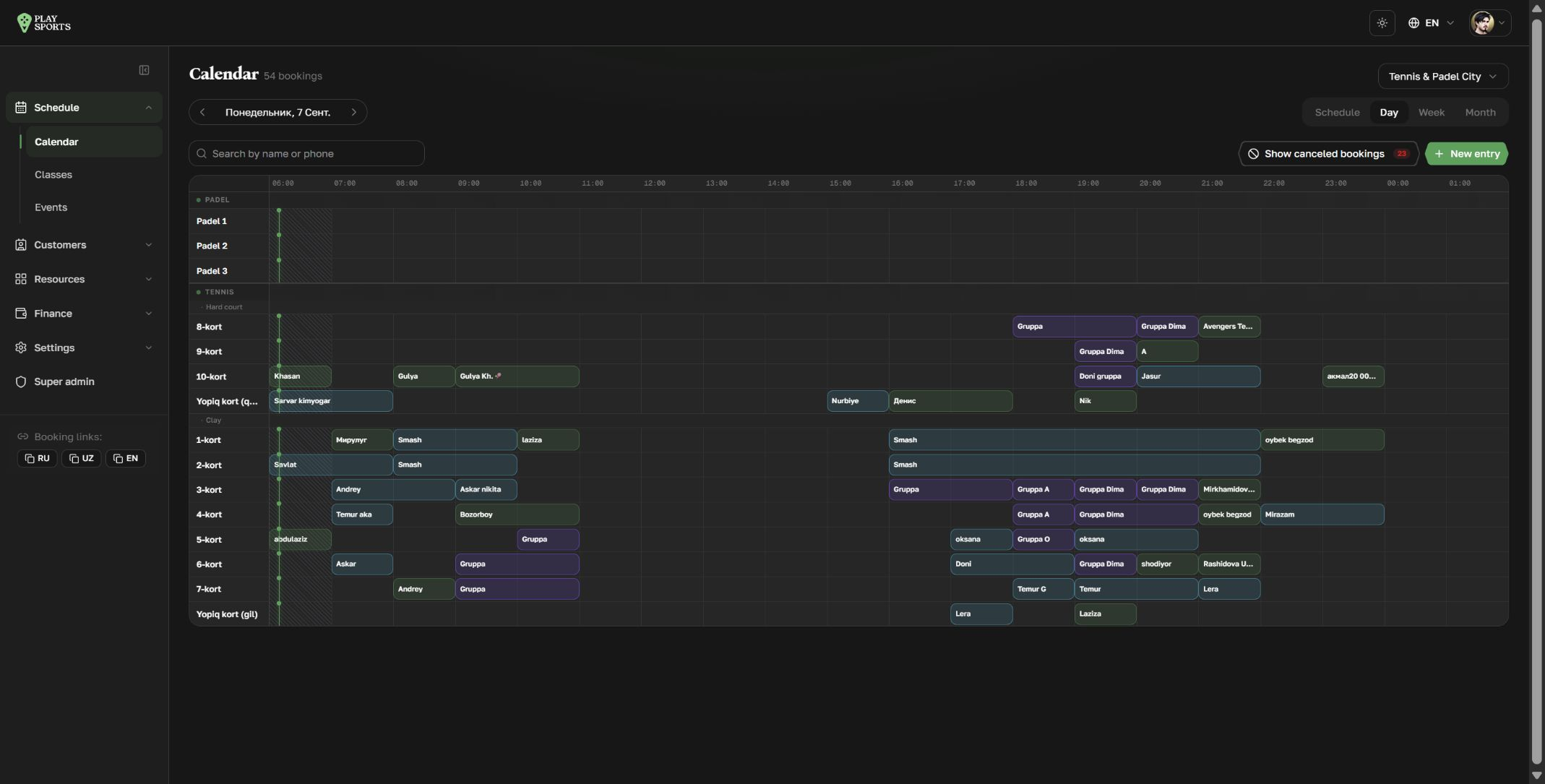
PlaySport booking and club-management interface mockup with overlapping court selection and live calendar views
Own productBooking & club operations

PlaySport

A live sports platform connecting player bookings, court schedules, club operations, payment integrations and financial reporting.

  • Next.js
  • Booking management
  • PostgreSQL
Read the case study

One platform for players and club teams

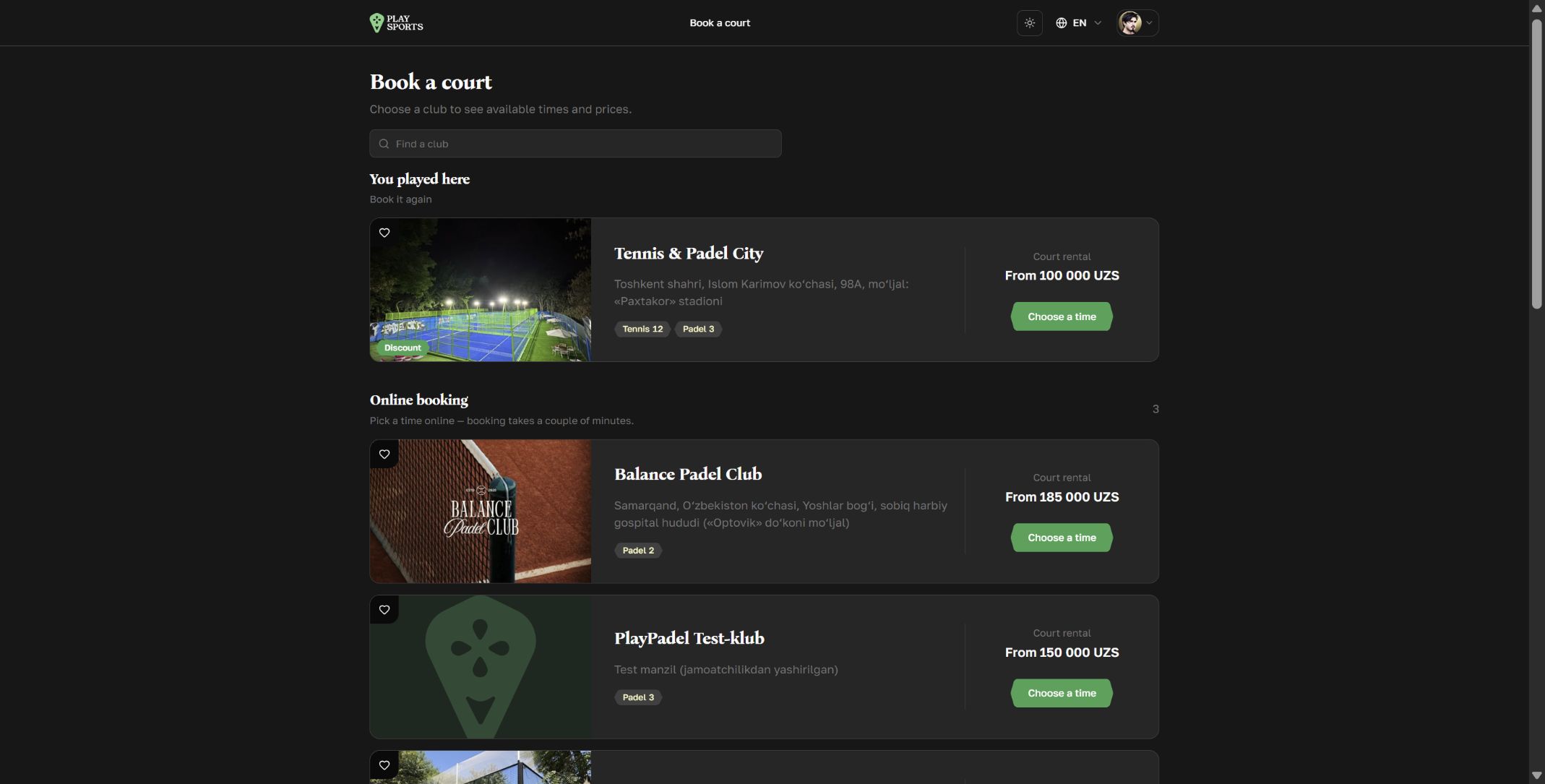
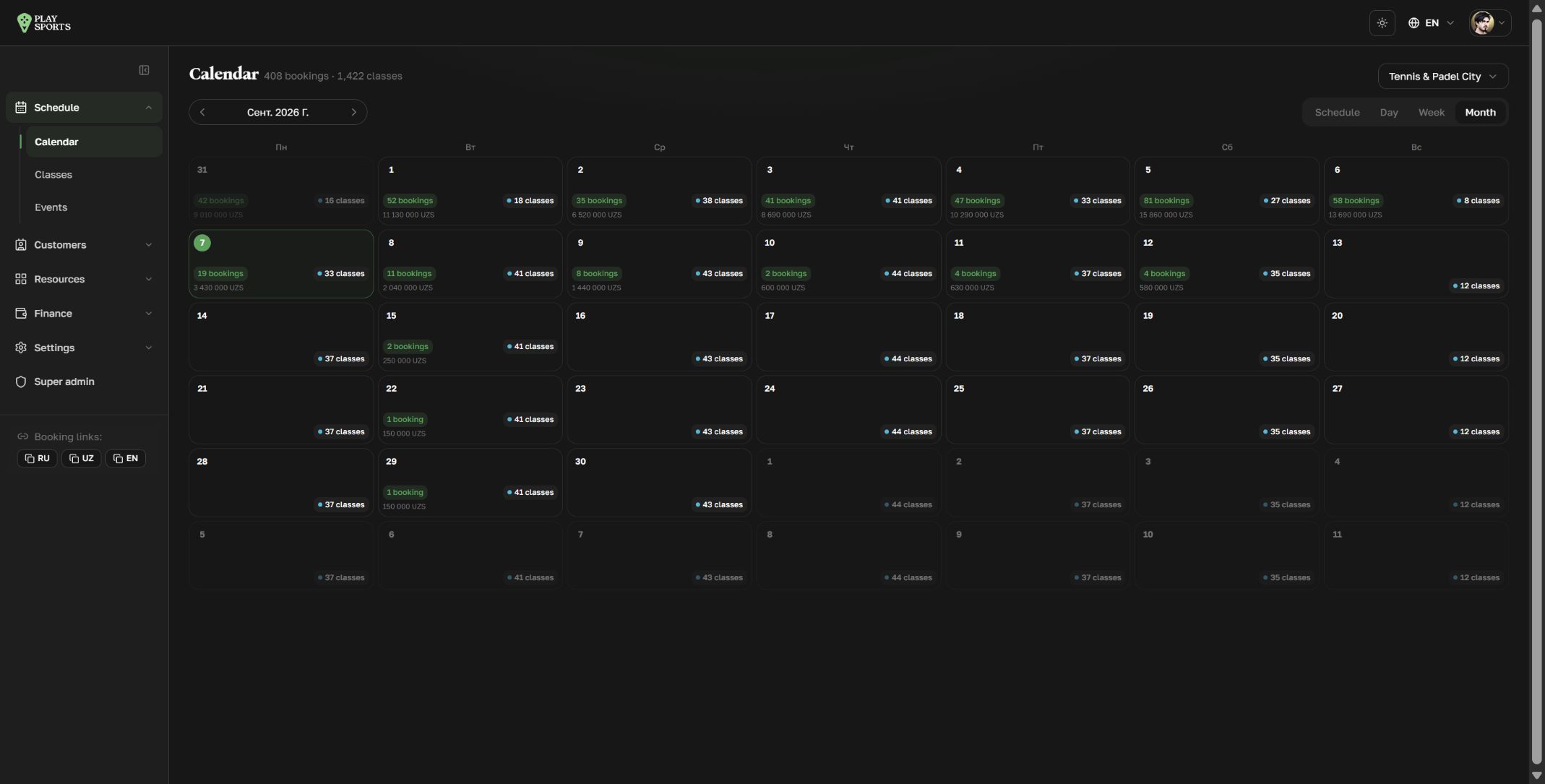
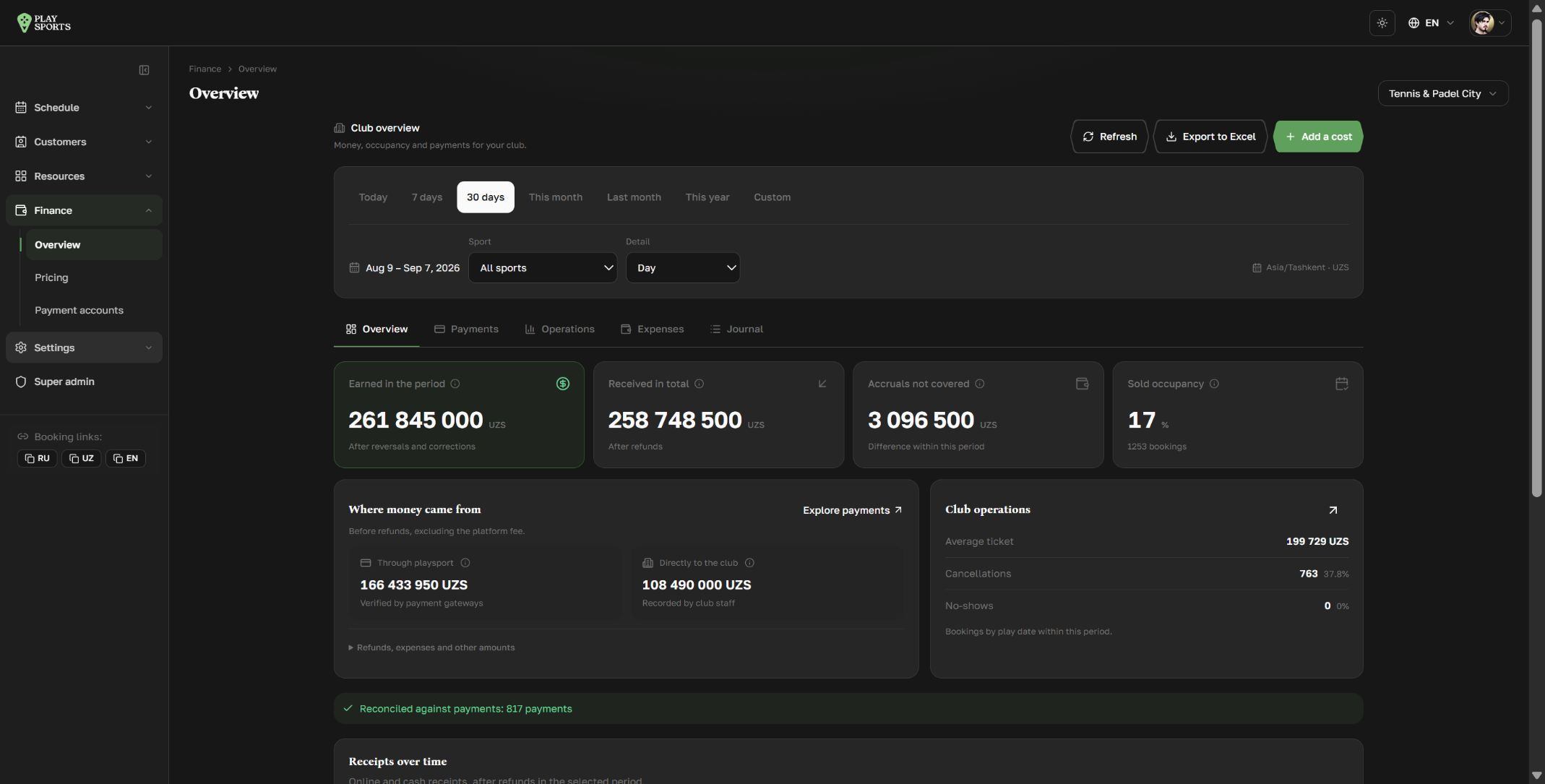
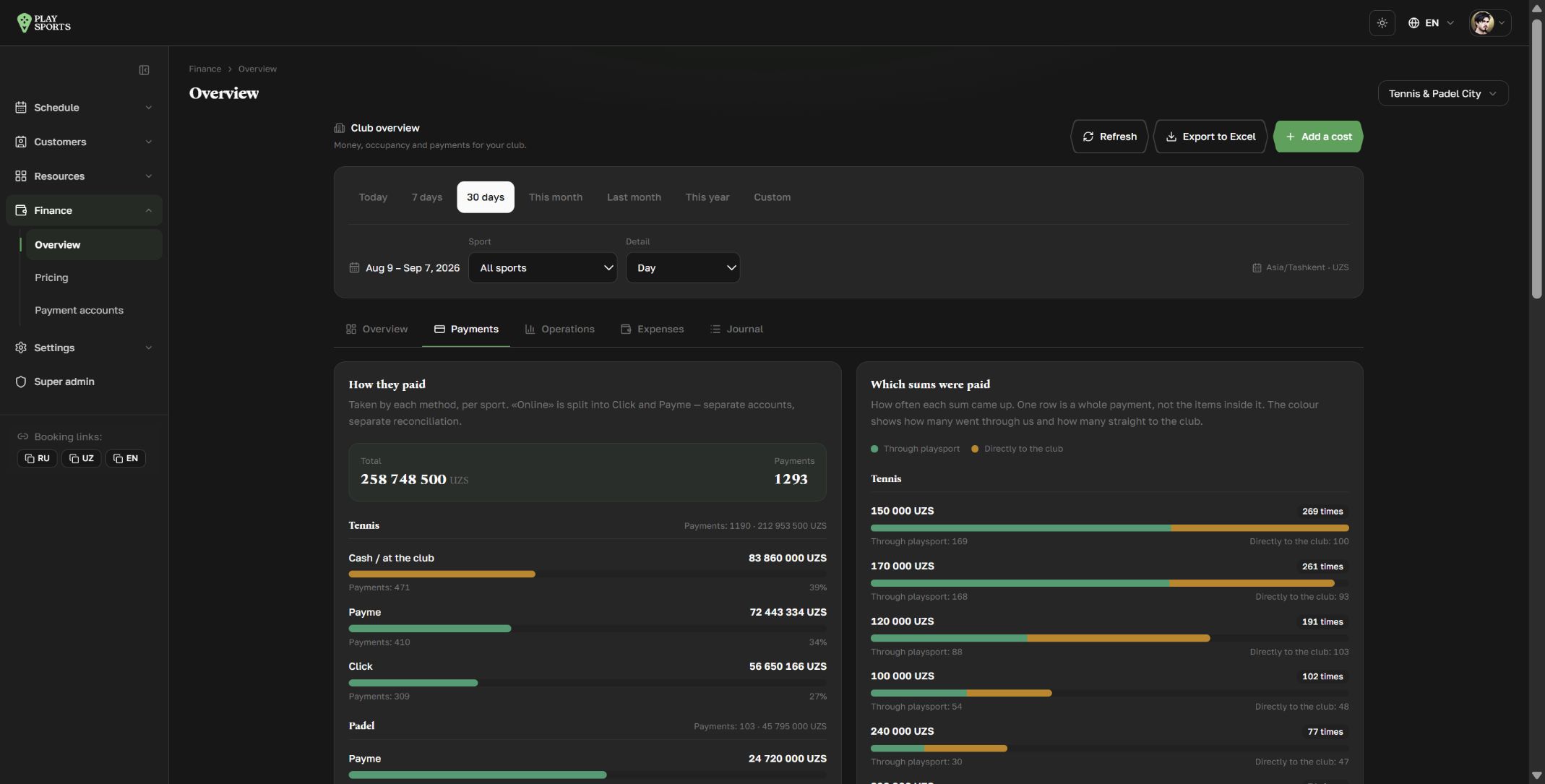
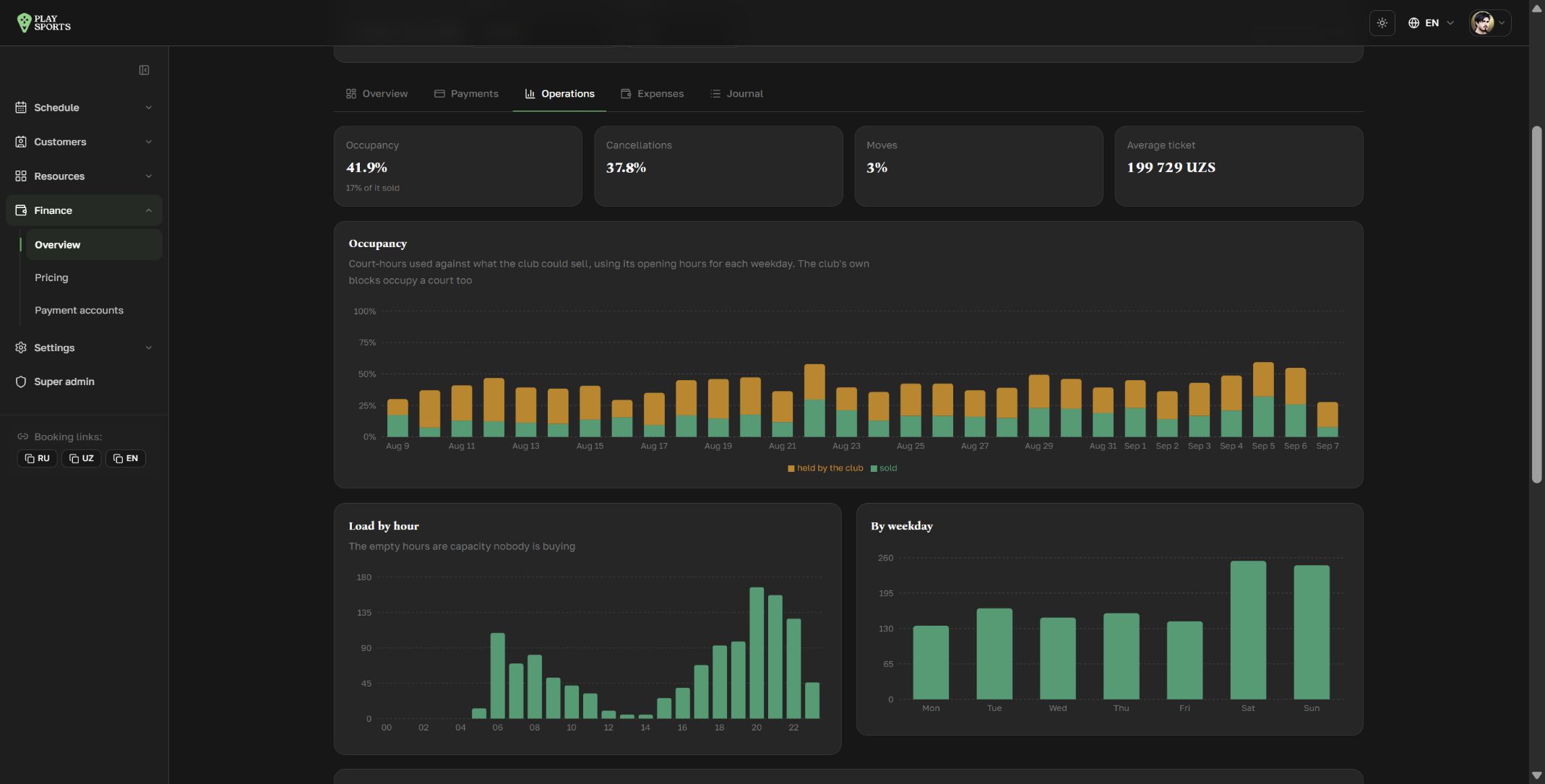
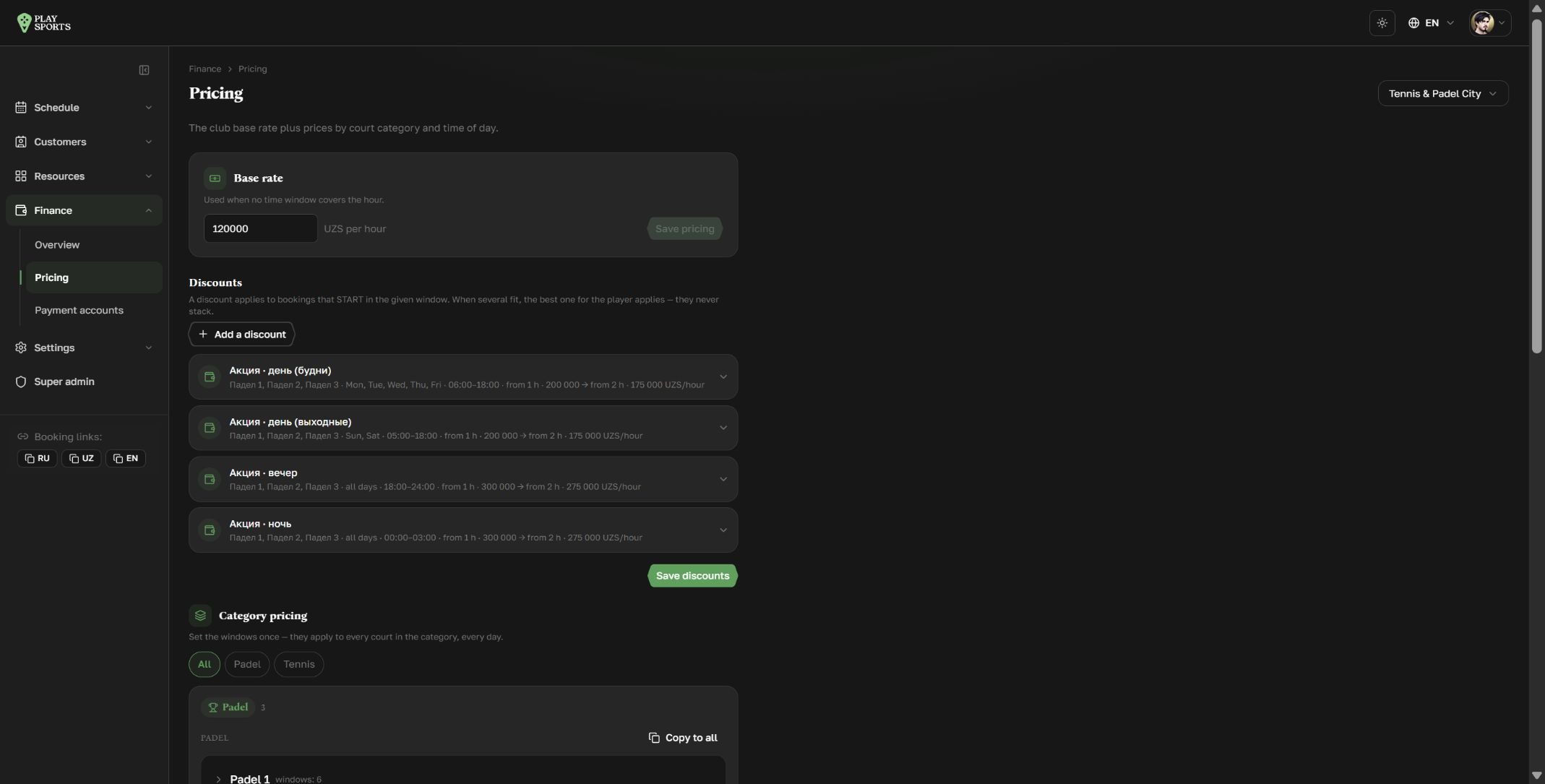
PlaySport is my own production sports-booking and club-management platform. I built the customer-facing booking experience alongside the operational tools a venue needs to manage courts, reservations, pricing and money. The two sides use the same underlying booking data, so the product connects the player’s choice of a time slot with the club’s daily schedule and financial records. The screens show the live Tennis & Padel City workspace in Uzbekistan.

A clear player booking journey

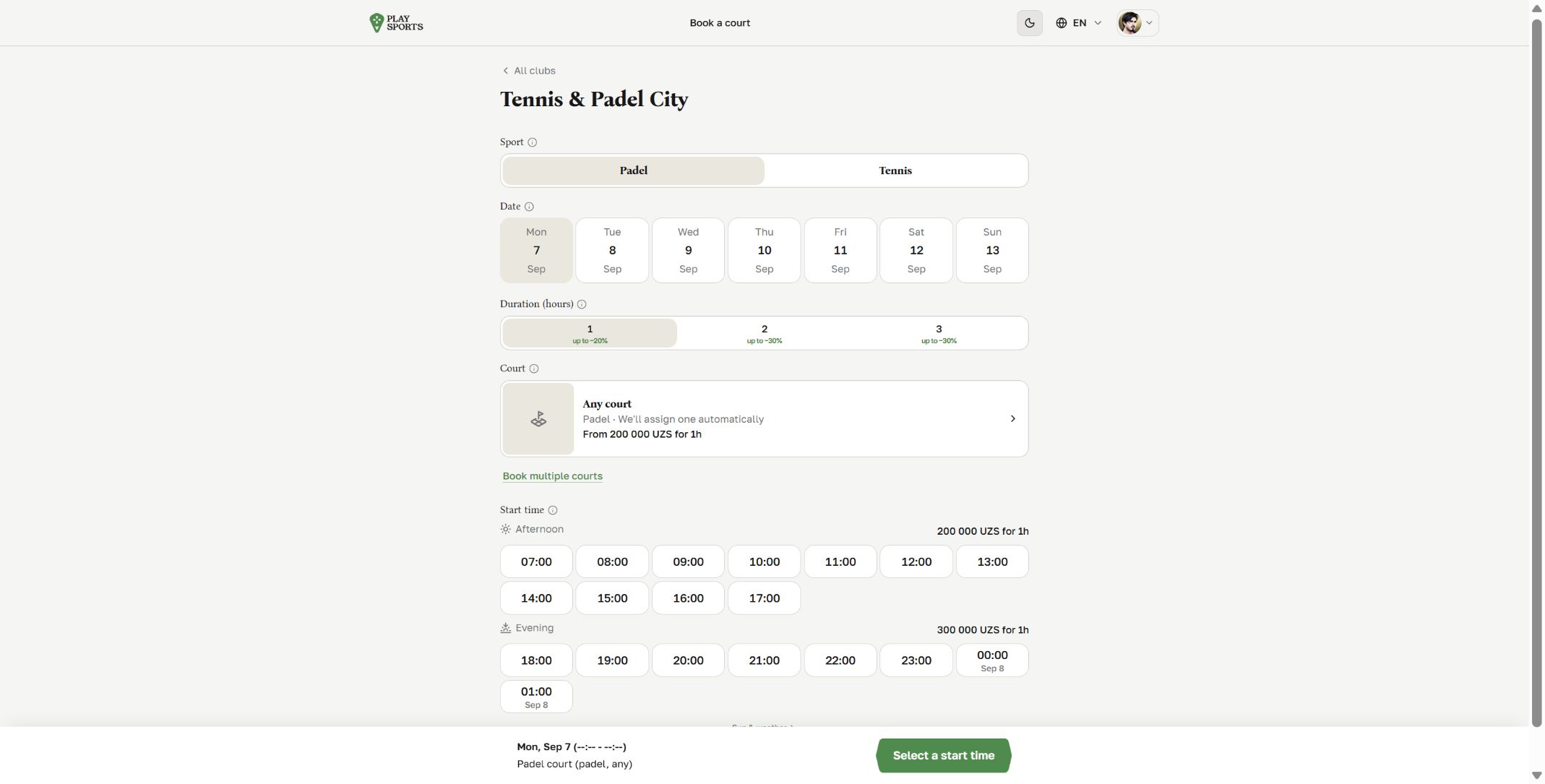
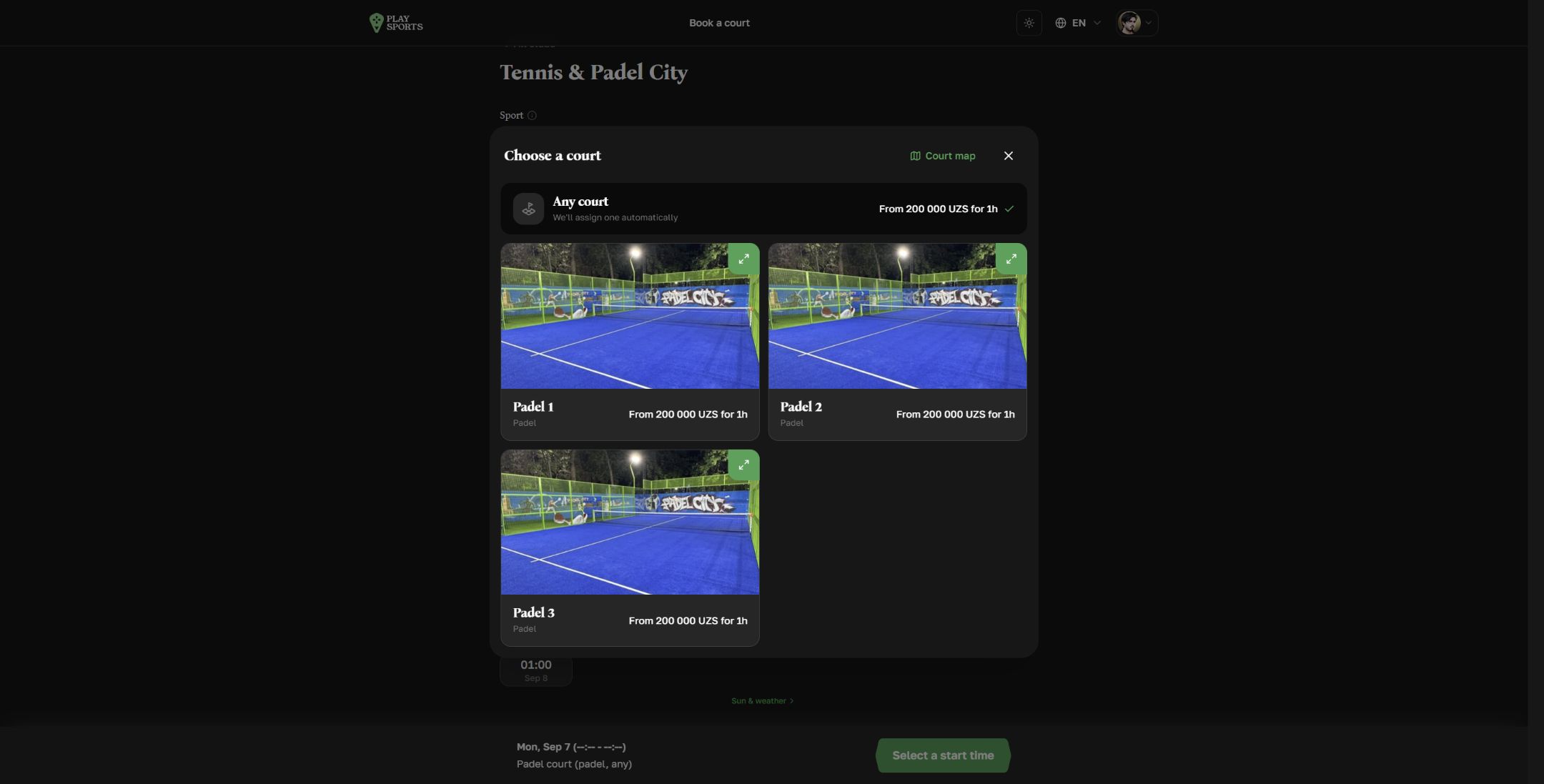
Players start with a club directory containing sports, venue photos and starting prices. Inside a club, they can select a sport, date, duration and court, or let the application assign a suitable court automatically. Court photos and individual prices help with the decision, while available start times are grouped into useful parts of the day. The interface also exposes multi-court booking and sun and weather context. The wider booking flow supports guest reservations, Payme and Click integrations, split payments and pay-at-venue workflows.

Daily operations at different scales

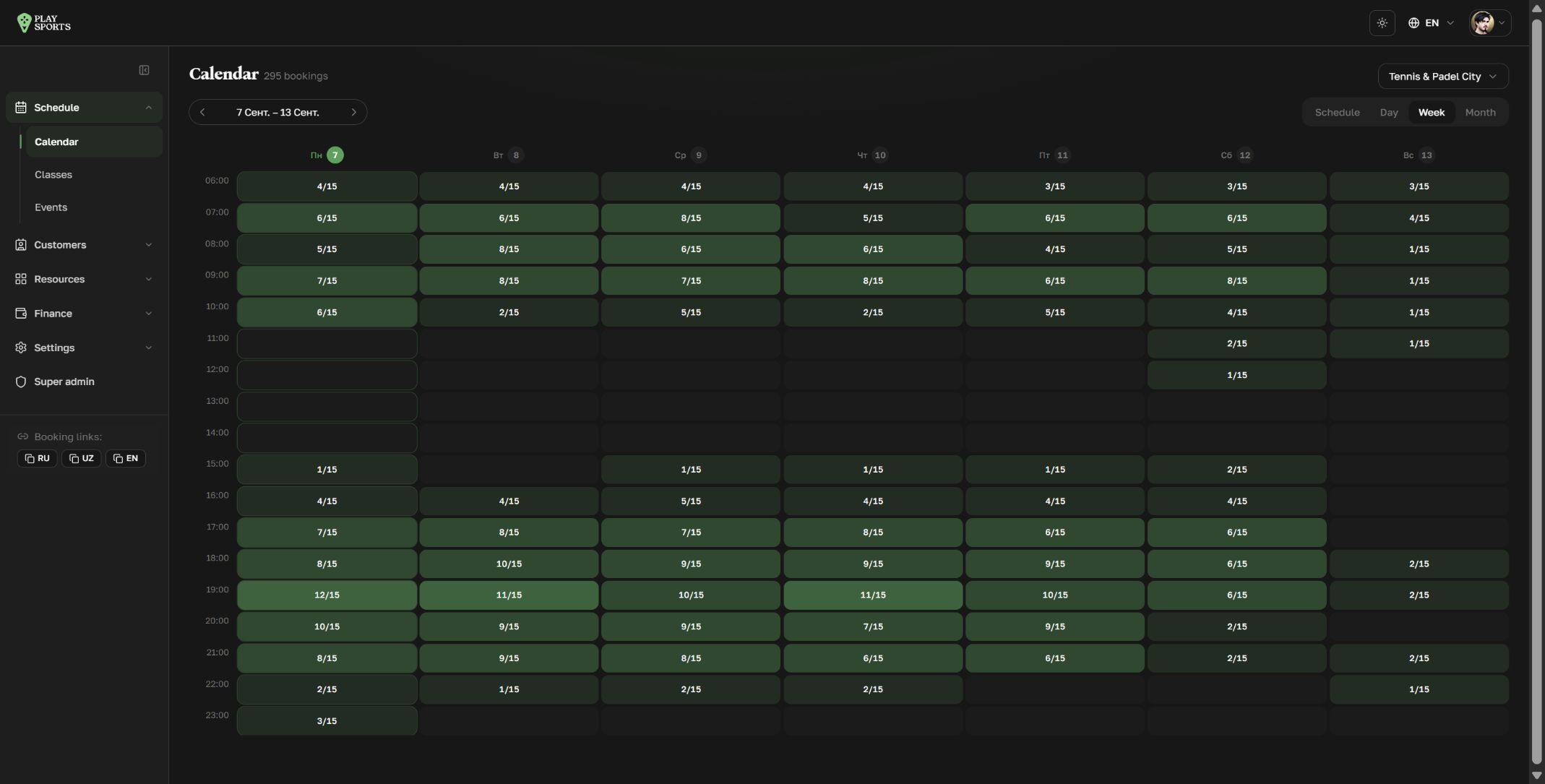
The management workspace gives staff several ways to understand the same schedule. The day view maps reservations and blocked time against individual courts. The week view shows capacity across hours and days, while the month view summarizes bookings, classes and amounts. Venue selection keeps work tied to the relevant club. Customer records, classes and events, court and coach setup, inventory, check-in and notifications form the surrounding operational workflow. Owner and manager access is scoped to the clubs and responsibilities assigned to each user.

Finance that keeps distinct numbers separate

The finance dashboard distinguishes earned amounts from money received and shows the difference for the selected reporting period. Online gateway records are presented separately from payments entered by club staff. Owners can inspect payment methods by sport, including cash, Payme and Click, and compare the distribution of paid amounts. Operational charts add another perspective: sold and blocked capacity, hourly load, weekday patterns, cancellations and average booking value. Reporting uses the club’s currency and time zone, with selectable periods and sport filters.

Pricing rules the team can maintain

Pricing combines a base hourly rate with court-category time windows and discounts. Existing rules can depend on the day, start-time window and booking duration. When several discounts apply, the interface explains that the best player price is used rather than stacking reductions. This connects the rates visible to players with controls that the club team can maintain inside the same product.

Full-stack product implementation

The web application uses Next.js, React and TypeScript, with PostgreSQL and Drizzle ORM for application data. Tailwind CSS supports the interface, next-intl supplies localized navigation and content, and Recharts powers financial and operational charts. Shared domain logic handles booking and pricing concerns across the application. This project brings together the parts that often become separate tools: public discovery, availability, reservations, staff operations, payment records and reporting.

MailCore laptop and tablet mockup showing a public email demonstration and pricing calculator
Own productEmail & infrastructure

MailCore

Corporate email with a clear path through domain setup, mailbox management and everyday access.

  • Docker
  • Linux
  • Mailu
Read the case study

The problem

Email on a company’s own domain needs understandable setup steps and access through familiar applications.

What I built

A corporate-email product with guided DNS setup, saved onboarding progress and mailbox controls. Docker, Linux and Mailu support the infrastructure, with standard IMAP and SMTP access.

What you can review

The product materials and portfolio case describe the domain-onboarding process and underlying mail components.

Relevant work: technical onboarding, operational interfaces, configuration guidance and handoff documentation.

PACT laptop mockup showing trademark search with an overlapping pricing detail
Own productService workflows

PACT

Clear service pages and structured intake, connected to case workflows and document preparation.

  • Next.js
  • Multi-step forms
  • Documents
Read the case study

The problem

A service process needs consistent intake information and a useful connection between forms and document preparation.

What I built

A Next.js product for trademark-service workflows in Uzbekistan, with public service information, multi-step intake and generated documents.

What you can review

The product site and portfolio case show the service interface and describe the software workflow.

Relevant work: service landing pages, structured inputs, multi-step forms and workflow-connected documents.

Ergo Analytics laptop and tablet mockup showing research projects and practice areas
Own productResearch & publishing

Ergo Analytics

A multilingual research website with structured publications, project directories, editorial content management and search.

  • Next.js
  • Multilingual CMS
  • Search
Read the case study

Ergo Analytics is a research and consulting website I developed, bringing the organisation and its HC Lab research hub into one connected web experience.

The site organises practice areas, research projects, publications, news, events and team profiles through reusable editorial layouts. Visitors can browse project directories, explore related research and move between English, Russian and Uzbek versions. Search and locale-aware navigation help readers find relevant content across a substantial publishing archive.

The publishing setup combines Keystatic content management with MDX and JSON content compiled through Velite. Reusable page components support filtered project listings, an editorial calendar and Pagefind search. Sitemaps and language-specific metadata connect the content to its correct public routes.

Built with Next.js, React, TypeScript, Tailwind CSS and next-intl, the website gives editors a consistent foundation for maintaining research and organisational content. Shared navigation and content models connect the main organisation, affiliated lab and publication archive.

The result is a multilingual content platform that brings institutional information and research publishing together, with a structure that can accommodate new sections and ongoing editorial work.

HIVE Education laptop mockup showing its Russian and Uzbek course workspace, lesson video and progress
Own productCourses & learning

HIVE Education

A Russian–Uzbek course platform with structured lessons, learner progress, course administration and purchase workflows.

  • Next.js
  • PostgreSQL
  • Course workflows
Read the case study

HIVE Education is an online course platform I developed for learners in Uzbekistan. The website connects a public course catalogue with the learning experience and the tools needed to administer educational content.

The public interface presents courses, teachers, study programmes and course detail pages in Russian and Uzbek. Within the application, courses are organised into modules and lessons, with learning blocks, assessments and student progress records. Account pages connect learners with the courses and materials available to them.

The administration area supports course editing, lesson organisation, teacher records, student management and purchase records. Checkout and payment-provider callbacks connect the purchasing flow, while document-generation workflows support course completion. Role-based access separates the learning experience from content and student administration.

The implementation uses Next.js, React and TypeScript, with PostgreSQL and Drizzle ORM for application data. Tailwind CSS, next-intl and reusable interface components support a consistent bilingual experience across the public website and learning screens.

The result brings course discovery, learning content and administration together within one maintained application, connecting the public website to the operational tools used to manage courses.

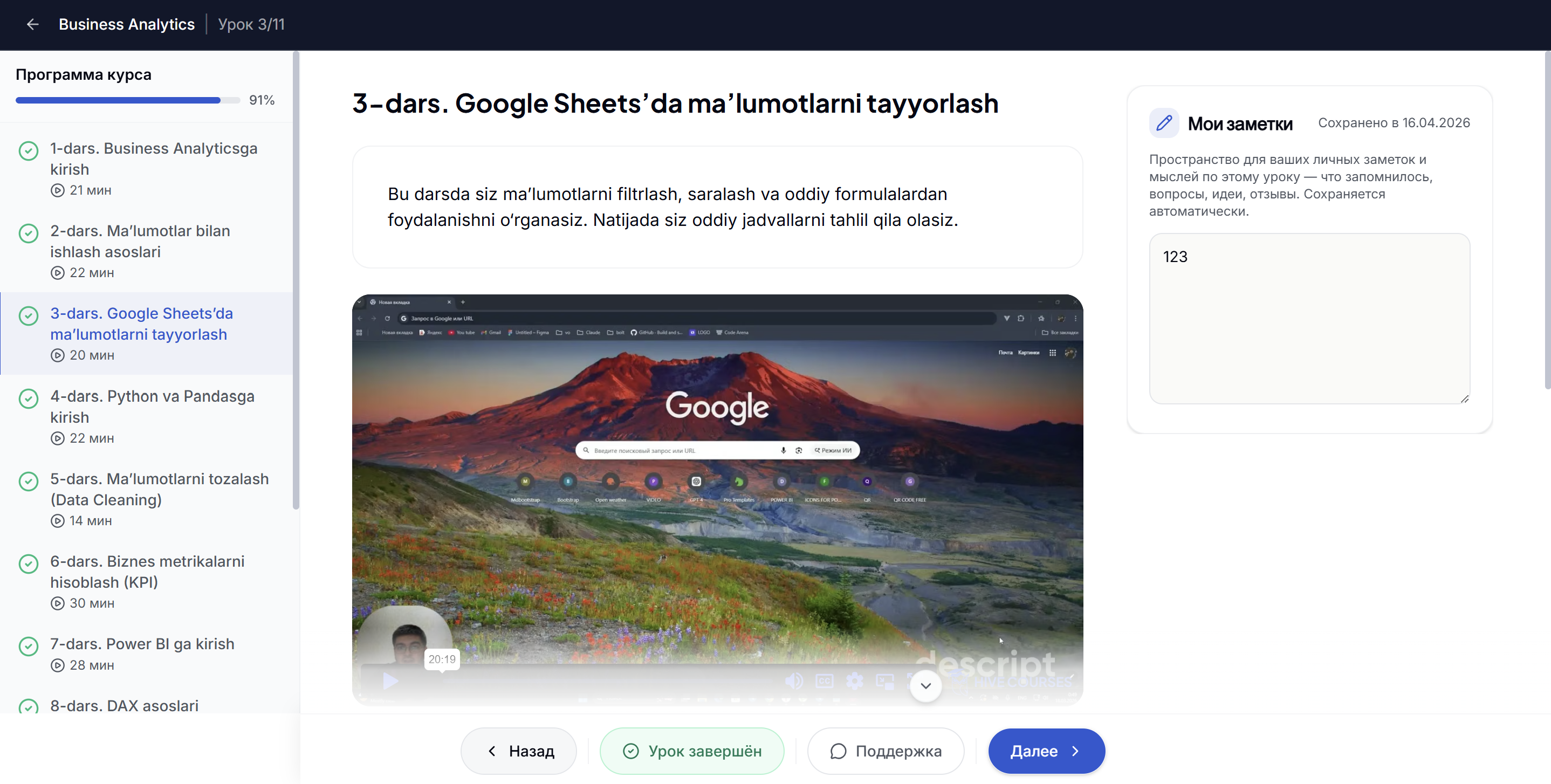
HIVE Education course workspace with Russian navigation, Uzbek lesson content, progress, a video and personal notes
Course workspace in Russian and Uzbek — lesson navigation, learning progress, video content and personal notes. View full size
Collabry laptop and tablet mockup showing its freelance marketplace homepage and service catalog
Own productFreelance marketplace

Collabry

A service marketplace connecting a searchable catalogue, project briefs, buyer–seller messages and order workflows.

  • Next.js
  • Medusa
  • Messaging
Read the case study

Collabry is a freelance-services marketplace I developed for Uzbekistan. It brings service discovery, project enquiries and the buyer–seller workspace into a single product.

Visitors can browse categories and fixed-price offers, open service and seller pages, and explore a project board. The account area connects profiles, published offers, project responses, conversations and order details, so the same user can participate on both sides of a marketplace.

The custom storefront is built on Next.js, React and TypeScript. Mercur and Medusa provide the underlying marketplace framework, with PostgreSQL-backed application data and additional workflows for the product's needs. Messaging combines buyer-side and seller-side conversations in one interface, while order pages connect transaction information and the delivery workflow.

The implementation also includes localised navigation, service taxonomy, saved items, account settings and structured page metadata. Russian, Uzbek and English-facing routes share reusable interface components.

The result is an integrated marketplace experience covering discovery, communication and order management. The architecture connects the public storefront with marketplace data while giving buyers and sellers a consistent workspace for their daily tasks.

WoW Auditor gaming monitor mockup showing character equipment and a gear detail
Own productGuild management

WoW Auditor

Guild management, raid planning and a public loot catalog, connected through character data and external game APIs.

  • React
  • TypeScript
  • API integrations
Read the case study

WoW Auditor is my own web application for World of Warcraft guilds. It brings roster management, raid planning and equipment tracking into one connected interface.

Members can review character gear, best-in-slot choices and loot history. Officers have tools for boss compositions, weekly activity, crafting and recruiting. A Mythic+ planner uses player availability to form groups, while a public loot catalog lets visitors browse drops by class, dungeon, raid and item slot without signing in.

The application uses React and TypeScript, with a Vite frontend and an Express backend. SQLite and Drizzle model characters, raids, items and planning records. Battle.net authentication and Blizzard data integration connect the product to game accounts; Warcraft Logs supports performance and recruiting views. An accompanying Electron app connects the website with the in-game addon.

The project shows how I approach data-heavy tools: related workflows share underlying records, with focused views for different tasks. It brings together a custom dashboard, external API integration and scheduling logic. Guild-specific screens and a public catalog give different users a practical way into the same product.

WowCarry gaming-commerce laptop and phone mockup showing its homepage, product options and checkout
Own productCommerce & service catalog

WowCarry

A gaming services storefront with game catalogs, configurable offers, detailed service pages and customer contact.

  • E-commerce
  • Product options
  • Catalog discovery
Read the case study

WowCarry is my own online storefront for gaming services, with a catalog spanning multiple games and service categories. Visitors can find an offer through game selection, search, category navigation and featured product collections.

Visual product cards lead to detailed service pages. These explain what is included and let visitors configure an offer before moving toward an order. The raid bundle page, for example, provides choices for region, completion speed, three raids and additional options. Currency selection, account access and a custom-offer request provide paths for different customer needs.

The site also includes guides and game news, connecting editorial content with the commercial catalog. Categories and supporting information are organized around player goals, such as preparing a character, joining a raid or finding a particular reward.

In my portfolio, WowCarry represents a live commerce product that combines catalog discovery, configurable offers, service descriptions and customer contact. The focus is the customer-facing experience and the structure of the storefront. It demonstrates how a specialized business can present a broad range of services through recognizable pages and a consistent visual system.

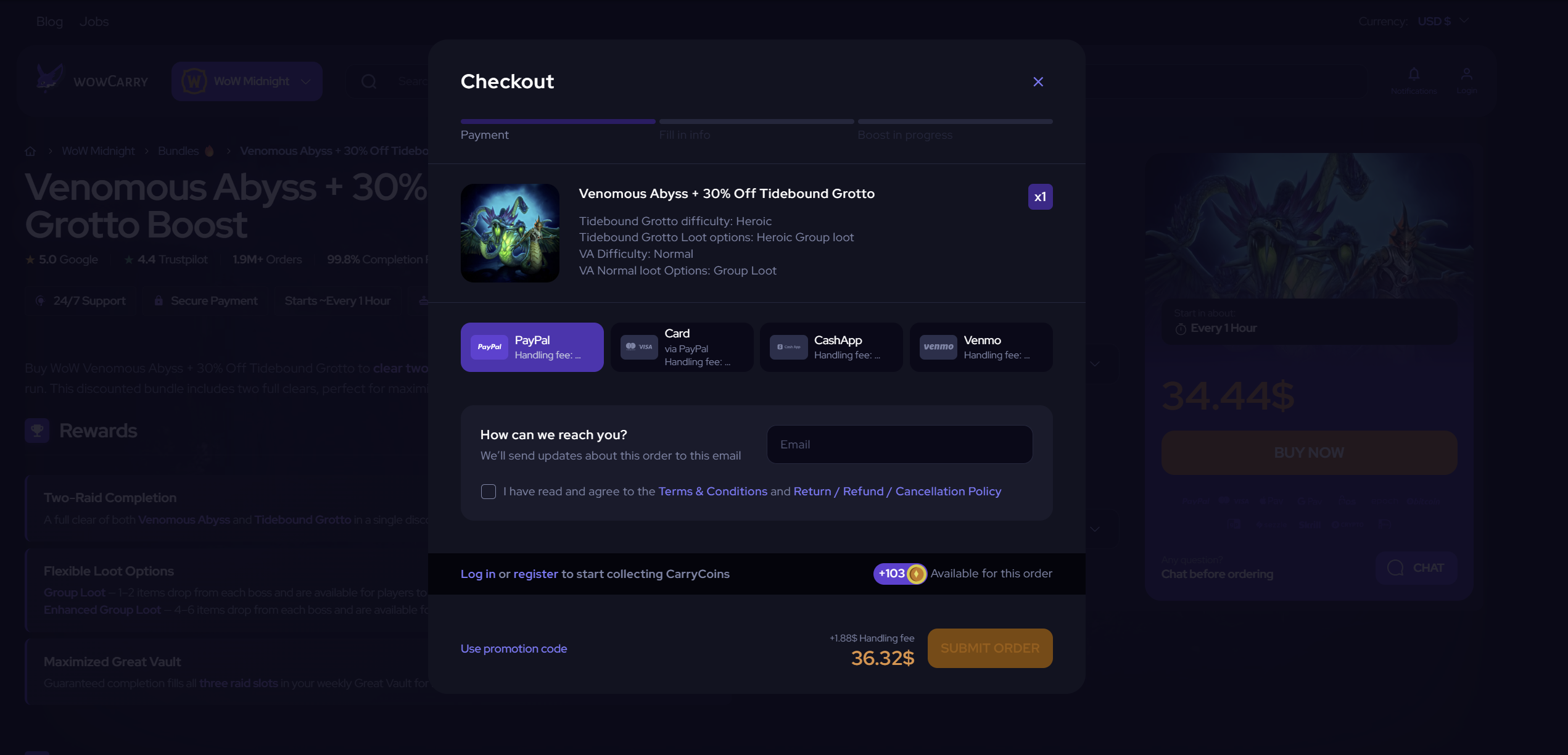
WowCarry checkout interface showing payment choices, an empty contact email field and an order summary
Checkout interface — payment options, contact details and order summary. View full size
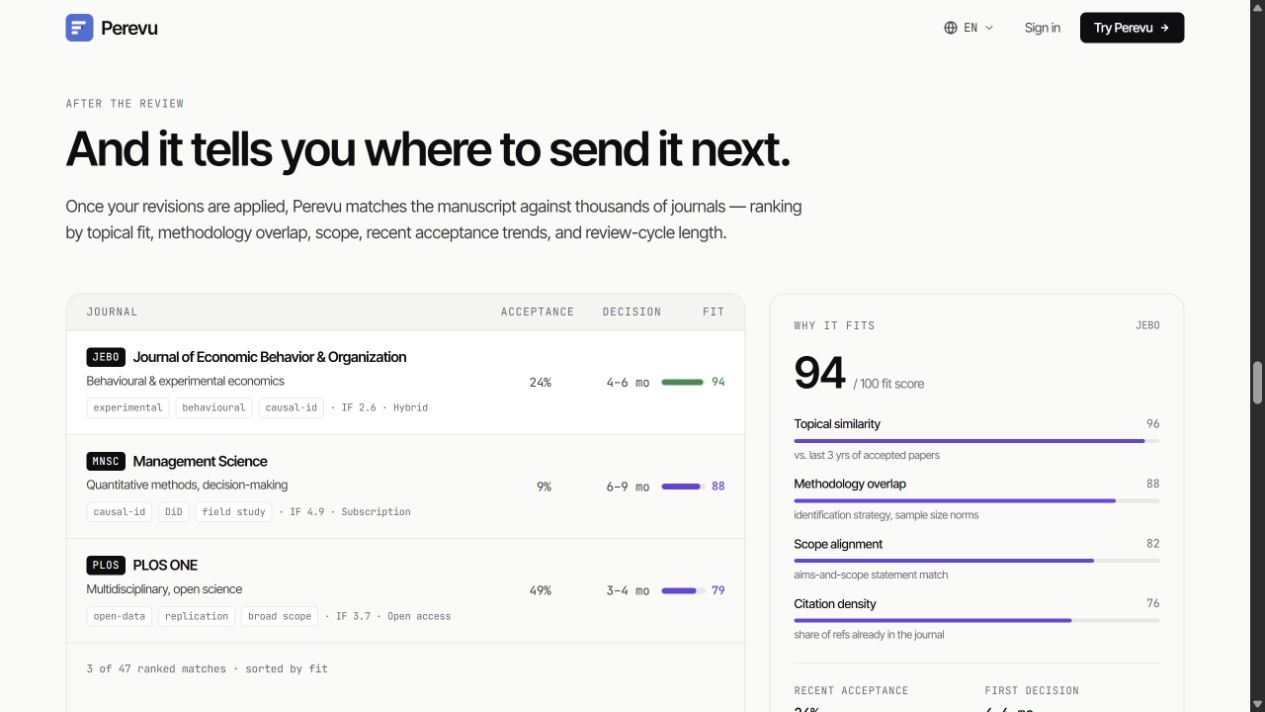
Perevu laptop mockup showing an academic review and journal discovery interface
Own productResearch workflows

Perevu

An academic-review product with interactive manuscript feedback, a staged review workflow, journal comparison and clear credit-based pricing.

  • Web application
  • Research tools
  • Document workflows
Read the case study

A clearer path from manuscript to submission

Perevu is my academic-review product for researchers preparing a manuscript for submission. It brings manuscript feedback, review-depth selection and journal discovery into one product experience. The interface gives a detailed review process a clear structure: understand the checks, explore a sample finding, compare review options and continue into the submission workflow.

Making the review process understandable

The public experience introduces a staged workflow, moving from manuscript intake and paper profiling through specialist checks, synthesis and final deliverables. Writing, structure, consistency, methodology, citations and statistics each have their own place in the interface. This makes the different types of feedback easier to understand before a researcher chooses a review level.

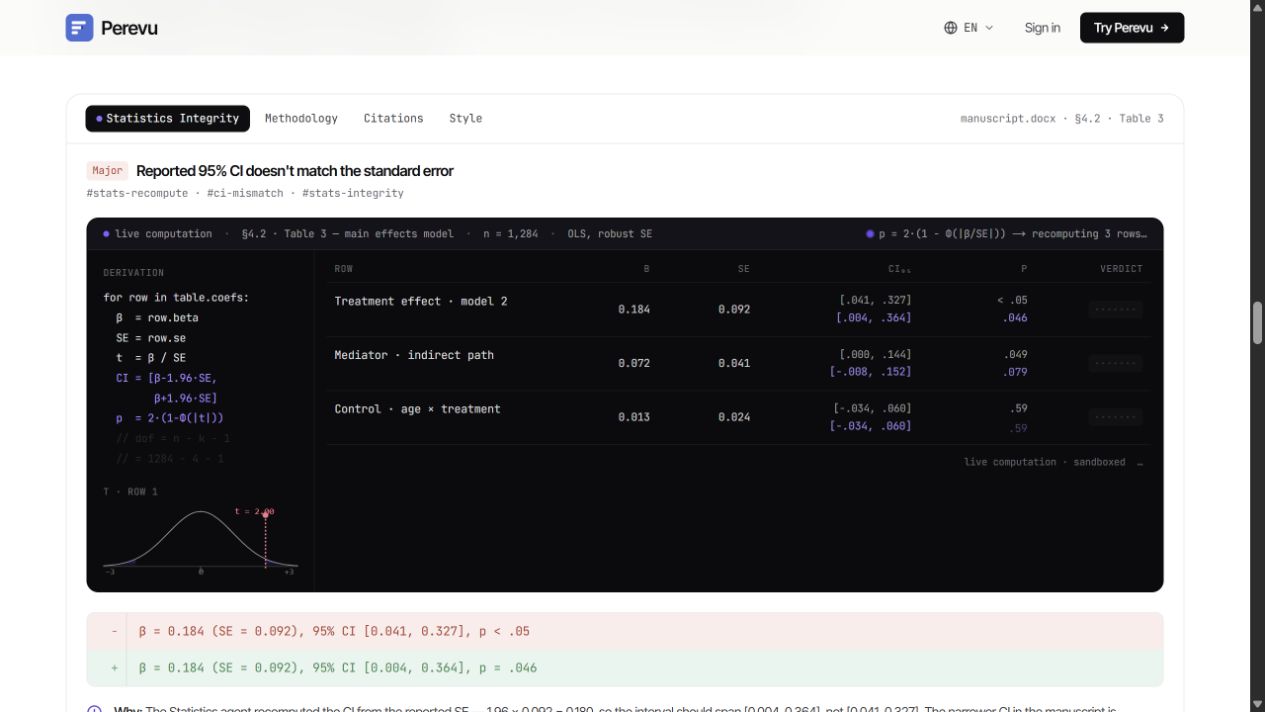
A central part of the experience is the interactive sample review. Visitors can switch between statistics, methodology, citation and style examples. Each finding connects a manuscript location with a severity label, supporting explanation and proposed revision. The methodology example traces a claim against its supporting evidence, while the statistics example presents original and recalculated values side by side. The layout keeps the issue, reasoning and suggested change together, making a dense review easier to scan.

Connecting feedback with the next step

The journal-discovery preview extends the workflow beyond editing. Selecting a journal changes a companion panel with its fit breakdown, subject and methodology alignment, scope, and publication information. A researcher can compare the reasoning behind different options without losing the shortlist. A dedicated Journal Match entry point leads into the account-based product.

Pricing follows the same emphasis on clarity. Essential, Professional and Expert are presented as different review depths, with a shared output format: a review report and an annotated Word manuscript. The comparison explains which checks belong to each level and how manuscript length affects the credit calculation.

One coherent product experience

The site supports English, Russian and Uzbek navigation, with clear routes to sign-in, registration, submission and pricing. Public examples let visitors explore the feedback format before creating an account. Across the experience, structured tables, expandable explanations and consistent calls to action turn a complex academic workflow into a sequence of understandable decisions. The result is a focused document product that connects manuscript feedback with the practical decisions around review and journal selection.

Selected interfaces from my own products, presented in custom cover artwork.

02 / Work with me

From your idea
to a useful result.

Launch a website, improve a store or connect your tools. These starting packages make the first step clear; larger projects receive a fixed quote before work begins.

Orange and blue illustration of a website repair

01 / A focused repair

Website layout
or JavaScript fix

$100USD fixed
2-day delivery

A mobile layout, menu or button that needs to work properly again.

  • One isolated issue on one existing page
  • Original problem and nearby behavior checked
  • Changed source files and a clear handoff note
  • One round of scope-matched adjustments
Package details

What does the $100 price cover?

One small, isolated HTML, CSS or JavaScript problem on one existing page, agreed before work starts. Examples include a mobile section overflowing, a menu failing to open or a button interaction behaving incorrectly.

Can you fix my form?

This package can cover a frontend form issue, such as a broken interaction or client-side validation. Email delivery, server processing and a new external integration need a separate scope.

When does the two-day delivery period start?

It starts once the issue, expected result and required files or access are available. I will confirm the scope in writing first.

What if the problem is larger than expected?

I will explain what I find before expanding the work. Additional issues, a redesign or backend changes require a separate agreement.

View the service
Blue and coral illustration of a website on desktop and mobile

02 / Copy, design and development

Business website
or landing page

$100USD starting package
7-day delivery

Start with your business idea. I shape the structure, draft the text, design and build the page.

  • One page, up to six agreed sections
  • Draft copy up to 600 words from your brief
  • Responsive design, source files and publication help
  • Two revision rounds; larger sites quoted first
Package details

Can we start without finished text or a design?

Yes. A short business brief is enough to start. I propose the structure, draft up to 600 words and create the page design. You review the text and confirm the business facts before publication.

Can you build a larger business website?

Yes. Send the pages and features you have in mind, or describe the business and I can suggest a structure. A larger build, including a five-page website, receives a separate fixed quote and timeline before work starts.

Can the page include a contact form?

A simple form connected to an existing compatible service can fit the starting package. We confirm the destination and test a submission. A new backend or a more involved integration is quoted before starting.

Are hosting and a domain included?

Help publishing to a compatible hosting account is included. Domain names, hosting subscriptions and paid third-party services are separate; we identify any requirements before work starts.

How do we communicate and when does delivery start?

We can use written messages and a preview link. The seven-day period starts once the brief, agreed structure, business facts and required access are available.

View the service
Purple and lime illustration of connected automation steps

03 / Connect your tools

Workflow automation
& API integrations

$100USD starting package
5-day delivery

Describe the manual process. I help define the steps, connect the tools and check the result.

  • One trigger, up to two apps and three actions
  • A clear specification shaped from your manual steps
  • Sample-based tests and common error handling
  • Source or workflow export, instructions and one revision
Package details

I do not know what can be automated. Can you help?

Yes. Describe your current steps and the outcome you want. I will suggest a practical first workflow and confirm its scope before starting.

What fits the $100 starting package?

One process with one trigger, up to two apps and up to three actions. For example, an incoming form saved to a spreadsheet with a notification, or a scheduled export. We confirm compatibility and the precise steps first.

Will it run automatically?

We agree an event or schedule as the trigger and configure it in a compatible environment. You receive instructions explaining how to run, pause and maintain the workflow.

Are subscriptions and hosting included?

Third-party subscriptions, API usage and hosting are separate. I identify any required services before work starts so you can decide on the setup.

Can you handle a larger automation?

We can define a larger project or additional stages. More apps, advanced branching, a new authorization flow, transaction processing or ongoing operation receive a separate quote and timeline.

View the service
Blue OpenCart storefront illustration with orange products

04 / OpenCart

Store fixes, customization
and extensions

$100USD starting package
3-day delivery

Improve the theme, resolve a store issue or plan an extension change around what you need.

  • One small agreed existing-store issue or change
  • Version, theme and extension compatibility checked
  • Changed files, checks and a clear handoff
  • One revision; larger changes quoted first
Package details

What does the $100 starting price cover?

One small agreed issue or change. Examples include a layout problem, a small theme adjustment or a reproducible issue with an existing extension. I review the task before confirming whether it fits the starting package.

Can you make larger changes or add a new feature?

Yes, send the result you want and I will assess the requirements. A larger customization, new extension or feature receives a separate fixed quote and timeline before work starts.

Will you change my live store?

We agree a suitable development or staging copy and release approach before making changes. You review the result before it is applied to the live store.

Are paid themes, extensions or apps included?

Any paid third-party license, subscription or app is separate. I identify requirements before work starts, and existing license terms still apply.

View the service
Purple WooCommerce storefront illustration with a peach shopping cart

05 / WordPress & WooCommerce

Website and store fixes
& customization

$100USD starting package
3-day delivery

Adjust a page, resolve an issue or improve the way your WordPress site or WooCommerce store works.

  • One small agreed issue or customization
  • Theme, builder and relevant plugins reviewed
  • Responsive checks where relevant, files and handoff
  • One revision; larger features quoted first
Package details

What does the $100 starting price cover?

One small agreed issue or change. Examples include a mobile layout problem, a theme adjustment or a reproducible display issue on a product page. I review the task before confirming whether it fits the starting package.

Can you make larger changes or add a new feature?

Yes, send the result you want and I will assess the requirements. A larger customization, new extension or feature receives a separate fixed quote and timeline before work starts.

Will you change my live store?

We agree a suitable development or staging copy and release approach before making changes. You review the result before it is applied to the live store.

Are paid themes, extensions or apps included?

Any paid third-party license, subscription or app is separate. I identify requirements before work starts, and existing license terms still apply.

View the service
Lime and green Shopify storefront illustration with products

06 / Shopify

Theme fixes, customization
and custom sections

$100USD starting package
2-day delivery

Make the store's theme work the way you want, from a mobile fix to a new section planned around your brief.

  • One small agreed existing-theme issue or adjustment
  • Review in a development theme before release
  • Changed theme files, checks and handoff notes
  • One revision; new sections and larger work quoted first
Package details

What does the $100 starting price cover?

One small agreed issue or change. Examples include a mobile spacing issue, a theme display bug or an adjustment to an existing section. I review the task before confirming whether it fits the starting package.

Is a new custom section included in the starting price?

The starting package covers one small existing-theme fix or adjustment. A new custom section is quoted after we agree its layout, editable settings and behavior.

Will you change my live store?

We agree a suitable development or staging copy and release approach before making changes. You review the result before it is applied to the live store.

Are paid themes, extensions or apps included?

Any paid third-party license, subscription or app is separate. I identify requirements before work starts, and existing license terms still apply.

View the service

Starting packages have the scope shown above. Delivery starts once the brief, expected result and required access are agreed. Larger work is quoted first; domains, hosting and paid third-party tools are separate.

03 / A simple process

A clear path
from task to done.

Written communication works well for these projects. We agree what success looks like, then use a preview or a concrete check to review it.

  1. Show me the task.

    Describe the business idea, store change or manual task, and the result you want. I can help turn it into a brief.

  2. Agree the scope.

    We confirm the deliverable, facts or access needed, price and acceptance check.

  3. Review and receive.

    I build, check and share the result. You receive the source files and useful setup notes.

Let’s make something useful

Have a project
in mind?

Start with your idea or a short description.
I can help shape the next step.

We can work in English, French, Italian or Russian.